What's Really Going On In Labour Markets?
There is so much surrounding wealth gaps, wages, house prices, etc. It's a very morally and politically charged field where it's hard to discern what's actually going on due to the incredible bias of almost everyone involved. As such I would like to navigate this area while attempting to be as objective as possible, to try and figure out what's going on.
In my investigations I have found that the answer is pretty simple, but something absolutely no one wants to confront (except for the billionaire few). Technological advancement has made most people useless. To understand this point we need to be reductive about what exactly an economy is and why people are paid to do what they do. Markets are where people use the value they create, abstract it into a shared value system (money) and then use that abstract value to purchase the things that they want. The value of what you do is entirely determined by how much people want what you do, compared to how easy it is to come by (supply and demand). I reject the marxist discussions around the "labor theory of value", historically it was all about how much time you spent doing things which created that value, people couldn't farm that much more efficiently than each other. But with technology, software, hardware, technological expertise, some people have skills which are enormously more valuable than others.
Take for example a software engineer who creates an app, sells that app for $10 on the app store to 100 million users. That person has just earned themselves 1 billion dollars. They have exploited no one's labour, they have, purely through their own talent and expertise, created $1 billion worth of value. People want their labour. The markets have determined that this person's work is valuable, work which is mostly intellectual. The intellectual element is the key differentiator here. People find far more value in intellect nowadays than in physical labour, and for good reason, physical labour is cheap, you can find it overseas or industrialised at extremely low cost. Which leaves intellectual labour as the major determinant in value. People want good ideas and good intellectual implementation. People want highly skilled workers who know how complicated things work.
This is the crux of the problem, the problem with labour markets in rich western countries is that no one really wants anything from people enough to pay them for it. In other words, a lot of people are becoming economically useless, and the bar is rising every year, exacerbated with the rise of AI. Let's remove money from the equation and look at the direct cause and effect of these situations, you want a TV, what can you provide a TV manufacturer that would make them want to give you something? The answer, for an increasing amount of the population, is pretty much nothing.
Money is allocated towards areas where people's demand lies. If people are willing to spend their time watching YouTube, that's where money will be. Consider that YouTube and internet entertainment as a whole could disappear and society would remain largely the same. It doesn't aid in supply chains, there is no downstream benefit of the industry, and yet hundreds of billions of dollars are allocated there every year. We have already made so much of the necessary industries so efficient that we can spend all the surplus value on paying millions to entertain us. The problem isn't in supply, it's that there is no value in a lot of people's labor, we already live in the age of abundance, there are very few people in society that are actually necessary for it to function. The problem with capitalism is that it is so efficient that it has rendered the bulk of our population redundant.
In Australia alone welfare is enormous, we spend 36% of our government budget paying people who we determine cannot or should not work (pensioners, jobseekers). When people discuss a future of abundance with AGI, wherein we will need UBI to make sure people have money, I disagree, because we already have UBI in the form of welfare. Look at the NDIS alone, mental illness is going up in Australia, we're already one of the highest in the world, is this because of a rise in mental problems or that the bar for valuable labour is rising, and those that cannot keep up are deemed "mentally ill" and given a form of UBI? We are not going into an "age of abundancy", we are already well into an "age of redundancy" (haha). You see this everywhere, people are finding ways to excuse their lack of competitiveness in the labour market in order to receive government payouts.
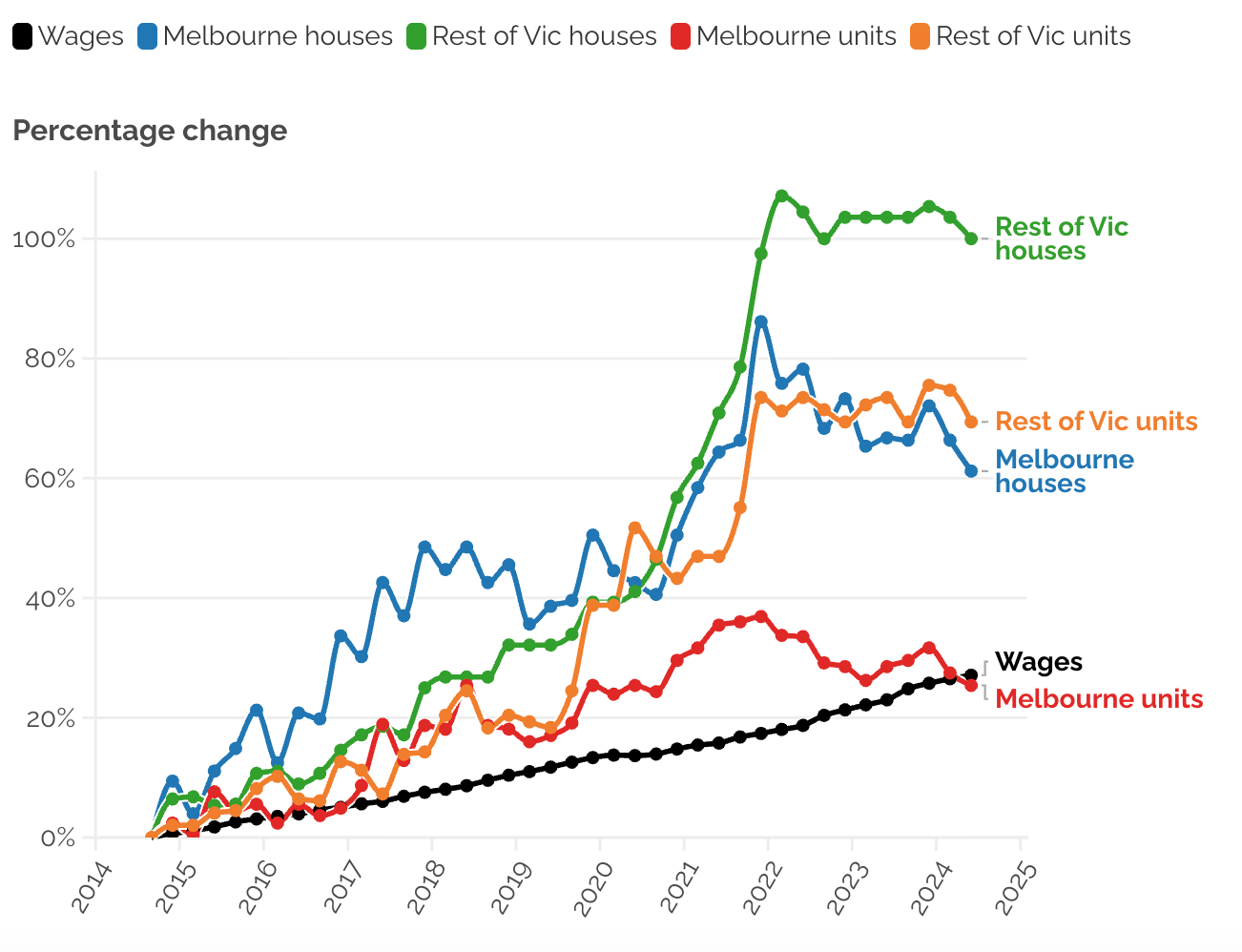
There is much discussion surrounding the causes of high house pricing in Australia, immigration increasing demand without increasing supply, greedy landlords buying up multiple rental properties, not enough tradies to build all the houses. But I intend to throw a curveball into the mix, has anyone considered that maybe people's labour just isn't really worth a house anymore? Both businesses and consumers aren't really willing to pay people a million dollars over time because their output just isn't high enough to create that much value. I'm being facetious here but I'm trying to illustrate a serious point. The question that people need to start asking is: what can I do that is worth a house?
Class stratification underpins this whole conversation, with Elon Musk set to be worth $800 billion, many people are reasonably upset that someone can be worth this much while they are struggling to make ends meet. So let's investigate why it is that markets have allocated so much money to such a concentrated amount of people, I know that some will contend that it stems from government corruption, and yes, that's true, but there's probably also more to it. AI engineers are getting billion dollar contracts from Meta and Apple, Jane street quants are making tens of millions of dollars, some NBA players are making $60 million a year. Lots of labour is still valuable even removed from capital ownership, when valuable labour is combined with capital to allocate, you get billionaires. A very reductive argument I'm aware, but I want to contend that it isn't that all wealth is being stolen or that we are slaves to a capitalist class, there are still valuable jobs out there, but they are becoming more competitive and lucrative.
Combine redundancy with wage undercutting by offshore allocation, and you get a labour crisis like the one we're seeing. And please, if you are reading this and intend to respond with "but large firms are saying they're experiencing a labour shortage", don't. When firms say this, they are talking about being unable to find people with highly niche skills and experience, they are not talking about entry level applicants. There are more people in university than ever, there are more people with postgraduate degrees than ever, there are more undergrads going through 8 round interviews for internships than ever. It is clearly a buyers market, companies have applicants jumping through hoops to even be considered.
Herein lies a crucial problem, what are people going to do once society has no use for them? There are probably some ugly answers here, the government is clearly scared of confronting them, as such 82.1% of new jobs created in Australia post-COVID are in the public sector!!! This is UBI. The government is literally finding things for people to do. I don't see this rise in public sector jobs going away anytime soon. Just look at the new giants in the private sector internationally, Ai companies hire practically no-one, because as previously mentioned, the value is in their intellectual labour, which is much more differentiated, with some people being orders of magnitude more capable than others.
Hence, according to everything I have just laid out, here is my prediction for the future. Private sector jobs will continue to be more competitive, more lucrative, and less common. Companies will be so efficient that they will create enormous surplus value, the government will then tax this surplus value, using it to create more and more niche jobs to keep people happy and employed (NDIS provider, stop sign holder). Welfare will go up to accommodate for the people that even the government does not want to employ. The rich will get richer, so much so that a fraction of their wealth will be enough to provide for the governments massive welfare reallocation process. Living standards will go up for almost everyone. The major problem to confront will not be whether people's living standards go up, it'll be whether people are happy with the massive emergent class differential that will soon form. The major question will be whether the majority of people can cope with the fact that a niche few are worth trillions, while they themselves aren't really worth anything at all.